Maciej Nielipiński and Jakub Filipek are far from stirring up ferment, although they have a great deal in common with ferment itself. They are, of course, interested in the enzyme, i.e. the protein that every living organism produces that regulates life processes. Members of the student research group SKN Ferment talk about the properties of nettle and how IT can be used in biotechnological processes.
Why 'Ferment', specifically?
Maciej Nielipinski (President): The group has been active since 1996. The name is probably simply related to the field of science, since a large part of biotechnological processes are based on fermentation. In our logo, there is a half-artistic, half-machine image of a fermenter with an agitator.
Jakub Filipek (Vice-President): A fermenter is a kind of bioreactor for carrying out a reaction, the culture of various types of microorganisms that carry out the reaction. As far as the beginnings of the research group are concerned, there were probably students who said: we want something more, to do something together, regardless of the years of study and specialization that separate us.
How does one become a member of the 'fermented' team?
Maciek: In theory, we recruit at the beginning of the semester, in practice there are no obstacles to applying during the academic year. We have over 40 members (a cross-section of five years, four majors). This year more than twenty people have joined us, and this has a lot to do with the pandemic. They all stress that they want to work in laboratories.
Kuba: When something needs to be announced or discussed, we organize online meetings. You can join us while studying any course. New members go through a trial period during which we monitor their activity. We are committed to the active participation of every member.
What do you primarily do?
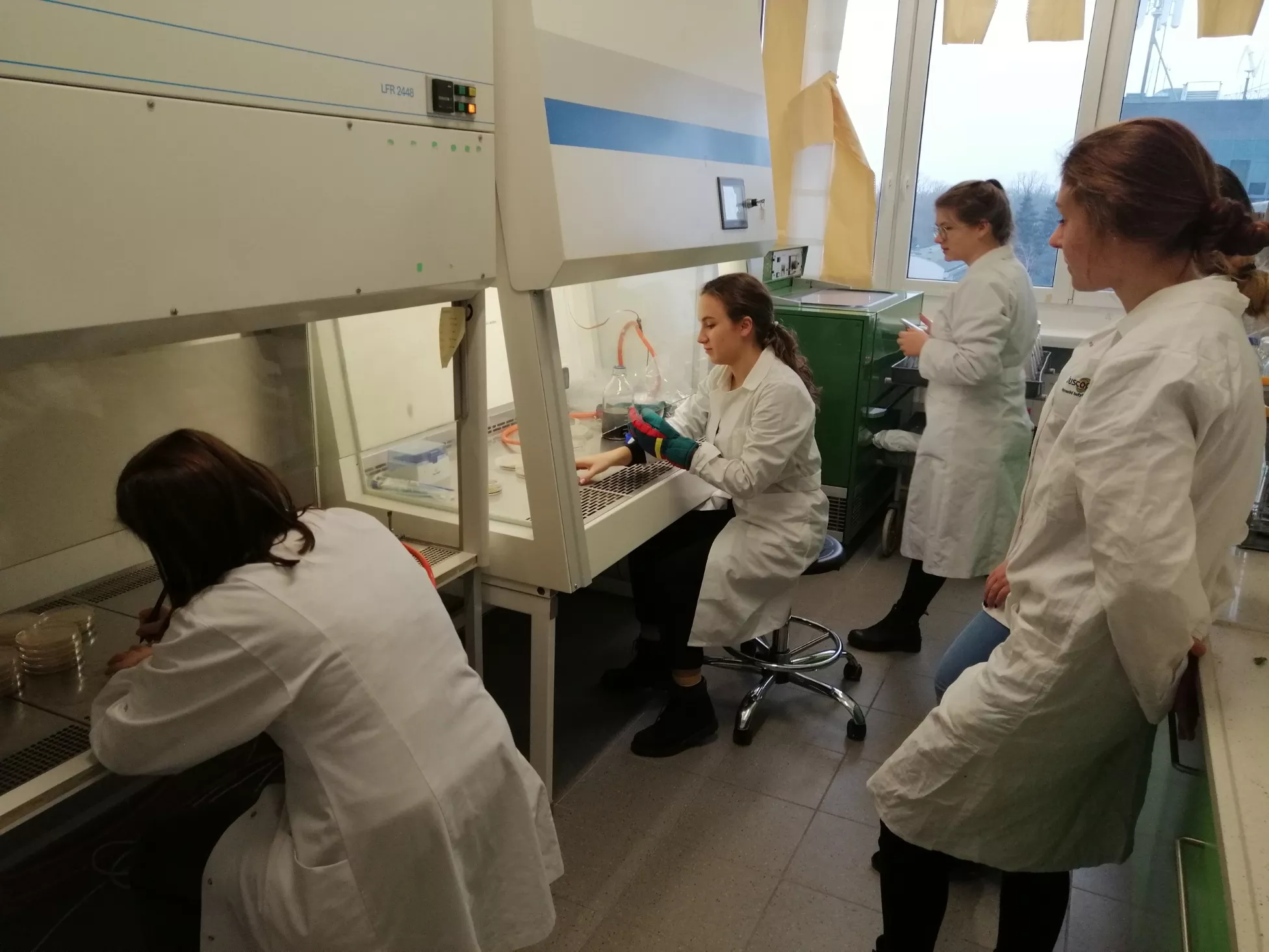
Maciek: We are currently running two projects. The first is: 'Analysis of endophytic microorganisms from nettle'. These microorganisms live inside plants. If you take a leaf and break it open and look at it under a microscope, deep inside there are bacteria or fungi. It is thought that these micro-organisms that are inside such a leaf may be responsible for part of the plant's enzymatic talents. Since nettle grows everywhere, including in post-industrial areas or areas polluted with heavy metals and hydrocarbons, among other things, we are trying to establish what possibilities there are for using such micro-organisms to clean the soil. Our focus is primarily on scientific and laboratory work.
What is the second project about?
Kuba: As its coordinator, I can say that it is very specific, because it was conceived in the pandemic when we could not attend the university. It is a bioinformatics project, that is, one that makes full use of computer tools to analyze biological data. In this case, it is the structures of regulatory proteins in bacteria. These are about very important processes that take place inside bacteria and enable them to live. Some of these proteins are involved in the development of antibiotic resistance, i.e. the ability of bacteria to cope with some antibiotic that we use, so that such a bacterium does not survive. This research is intended to help us determine whether certain amino acids, found in proteins, could be used, for example, to design a drug against such resistant bacteria. During the research, we worked at home on computers. Dr Pietrzyk-Brzezińska, who is the group's supervisor, trains us in everything and helps us run the project.
You also give lectures to high school students. What does that look like?
Maciek: This is a regular event, held once a year. We call it the 'May conference'. We invite biology and chemistry classes from various high schools in the Lodz Voivodeship and give them lectures. This year's motto was: "Get infected by biotechnology".
Kuba: We touched on epidemics and various diseases. I am a great example of how the May conference also brings interested people into the group. A colleague invited me to such an event, and I liked it and so I stayed.
You're not afraid to venture out into vast waters... What's your Mobile Ferment Laboratory all about?
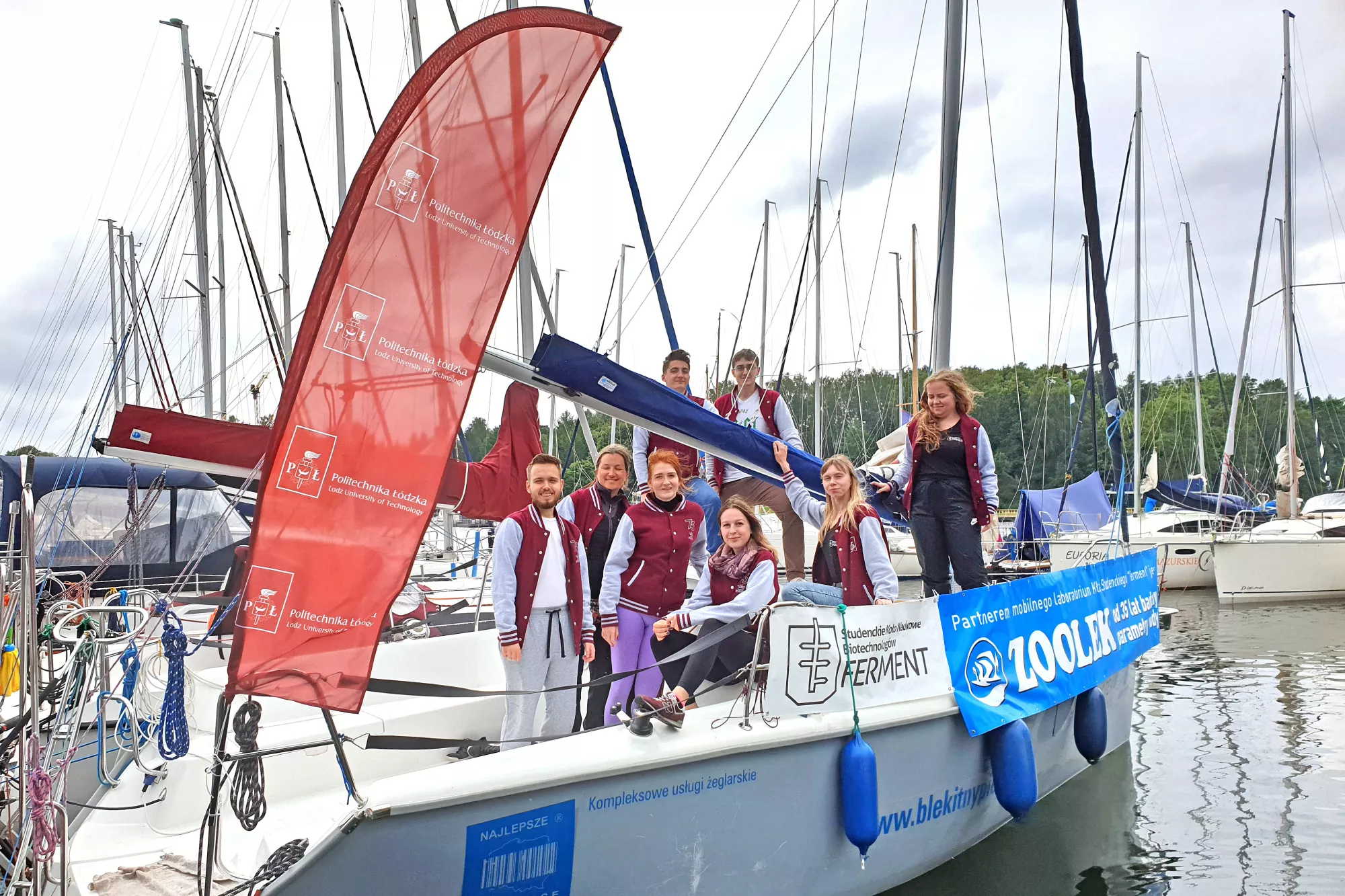
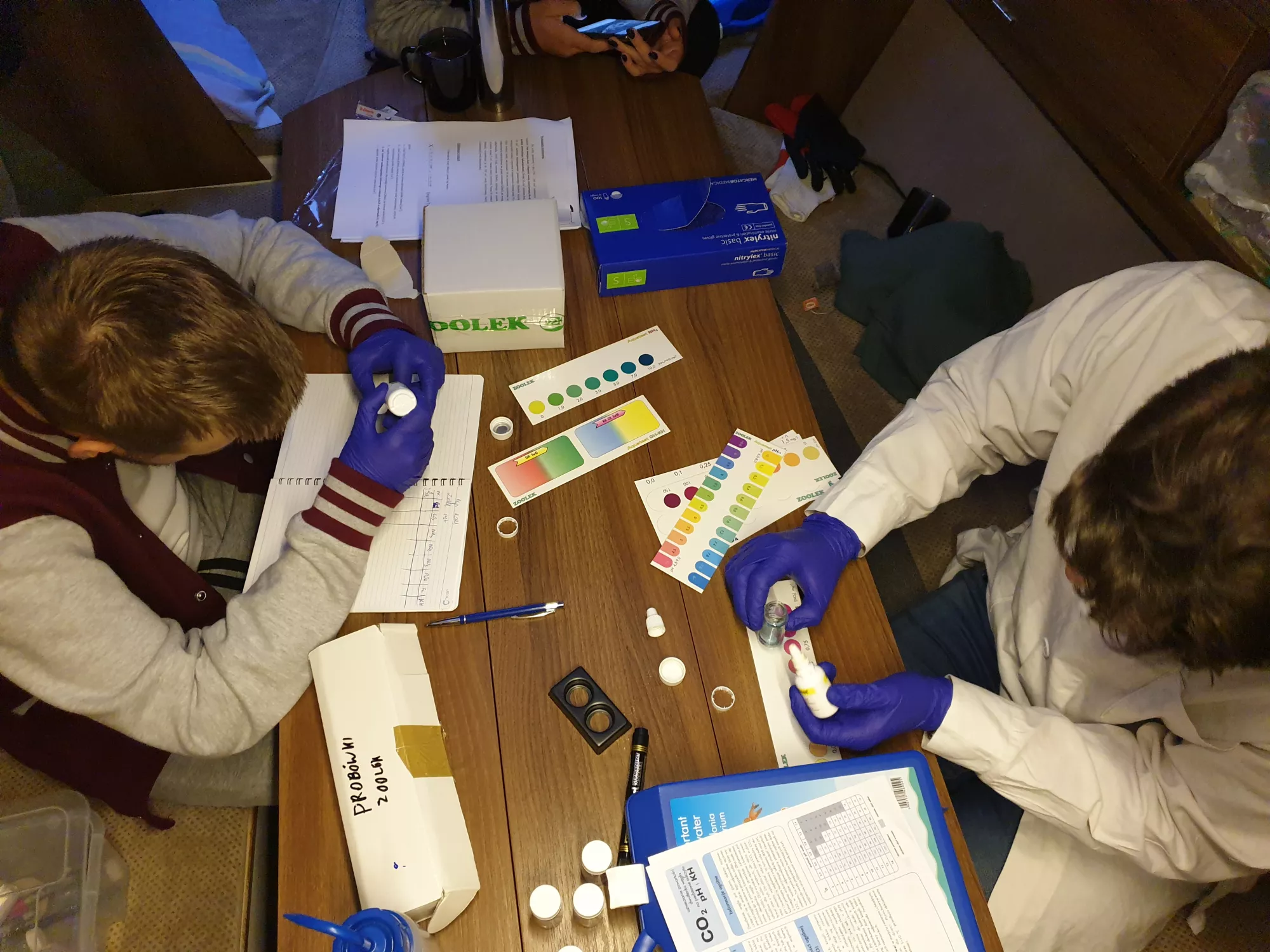
Maciek: It's a kind of scientific research cruise that we go on once a year during the holiday season. Depending on the year, we go either on motorboats or sailing boats, either to the Masurian Lake District or the Żuławy Loop. And so on. During the cruise, we study the water quality at specific locations and also have time for recreation and sightseeing.
You are very active. What does a student research group offer and how does it relate to the job market?
Maciek: I have been a member of Ferment for four years. To be honest, I signed up for access to coffee and a microwave. (Laughter) Being active in the research group certainly teaches you people management, time management, it accustoms you to speaking in front of an audience. These are all valuable in the job market. People who have graduated from university and have been active in the student research group have jobs or are doing a doctorate. Everyone is happy, which I think is the point.
Does the student research group offer anything more than a study?
Kuba: I think the group has helped many people to clarify their plans for the future and has offered good company. Most of my friends that I spend time with in the department belong to the student research group.
What plans do you have for the near future?
Maciek: A colleague suggested continuing her project with Project Based Learning. It is about the decomposition of masks, which are plentiful - they appear everywhere, and something needs to be done with them. They are made from cellulose, so they can be used as biofuel, for example. The second project is a continuation of the previous one - it is about 'Analysis of the antibiotic resistance of bacterial microorganisms of Lodz watercourses'. We study microorganisms in the waters of the Lodz Voivodeship, including the Sulejów Reservoir and the River Jasień. We are trying to quantify the DNA composition belonging to particular types of microorganisms. It is like looking down on a forest and counting how many birds, monkeys and bears there are in it, only on a micro-scale. In the course of our research, we need to find out whether there are traces of an antibiotic resistance gene in particular places in a particular environment. We have selected several genes and will be testing them for this. If you would like to grow with us, you are welcome to do so.
Interview: Paulina Krygier
Photos: Jacek Szabela, privite photos